TEAS Scores by Program: ADN vs. BSN vs. Accelerated Cutoffs


There Is No Passing Score — Only Your School's Score
The most misunderstood fact about the TEAS: ATI sets no pass or fail line. Your report shows a composite percentage, four section scores, and a proficiency level — and each nursing program sets its own minimums. A 72 percent that earns admission at one school gets rejected at another. Chasing a generic "good score" without knowing your programs' cutoffs is studying without a target.
This guide explains how TEAS scoring works, typical minimums and competitive targets by program type, and how to convert those numbers into a personal study plan.
How Your Score Is Built
Your composite is the percentage of the 150 scored questions answered correctly (20 pretest items never count). Each section reports its own percentage, and ATI assigns a proficiency level describing readiness:
| Proficiency level | What it signals |
|---|---|
| Developmental | Below expected readiness — needs major preparation |
| Basic | Minimum readiness — below many cutoffs |
| Proficient | Solid readiness — meets the bar at many programs |
| Advanced | Strong, competitive performance |
| Exemplary | Top-tier performance |
Most programs expect at least Proficient, roughly the mid-70s and up — but the exact line is theirs, not ATI's. Some schools also set section minimums, most often in Science, so a strong composite with a weak Science score can still fall short.
Typical Cutoffs by Program Type

Ranges below are common patterns gathered from program admissions pages — always verify against your specific schools, since individual cutoffs vary widely.
| Program type | Common minimum | Competitive target |
|---|---|---|
| ADN / Associate (RN) | About 55–65% | 70%+ |
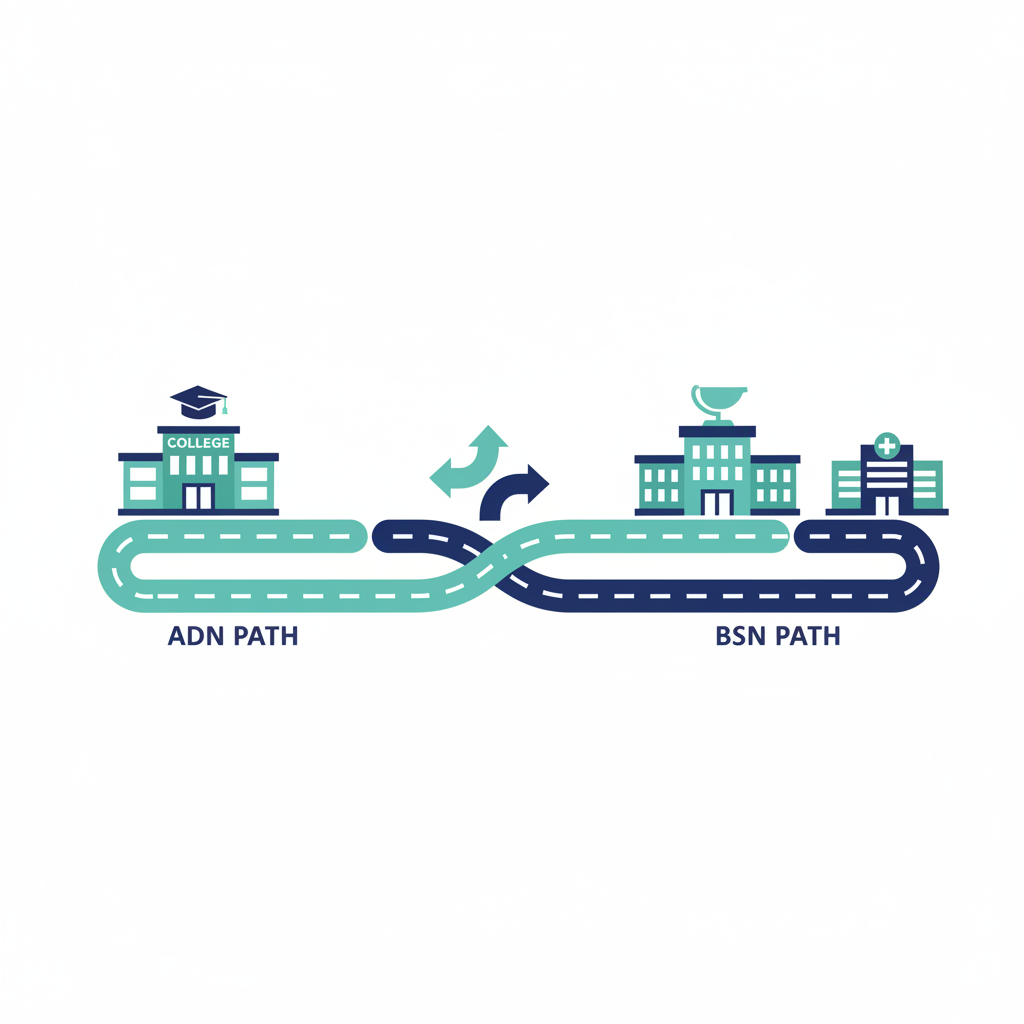
| BSN / Bachelor's (RN) | About 65–75% | 80%+ |
| Accelerated BSN | About 70–80% | 85%+ |
| LPN / Practical nursing | About 48–60% | 65%+ |
| Direct-entry / graduate programs | About 75–85% | 90%+ |
The national average sits near 65–68 percent, which means competitive BSN applicants must clear the average by a real margin. And competitive targets matter more than minimums: at selective programs, the gap between the cutoff and the admitted average is where applications are won.
Turn Cutoffs Into a Study Plan
- Collect every target's numbers. For each school, record the composite minimum, any section minimums, attempt caps, and the application deadline. One spreadsheet ends all confusion.
- Aim above the highest minimum. Set your personal target 5–10 points above the toughest cutoff — score variance between practice and test day is real.
- Weight study time by section size. Science (50 questions) and Reading (45) move the composite fastest; a point gained there outweighs one in English.
- Protect gatekeeper sections. If any program requires a Science minimum, that section gets priority no matter what the composite math says.
- Prove it in simulation. A full timed practice test at or above target, twice, is the only readiness signal that counts.
Your TEAS goal is not a number from the internet — it is the highest bar among the programs you will actually apply to, plus a safety margin. Define that number first, and every study hour after it has a purpose.
Frequently Asked Questions
Related Posts
View all articles
TEAS for LPN Programs: Scores, Paths & a 4-Week Plan
TEAS for LPN programs: realistic score targets, LPN vs RN paths, and a focused 4-week study plan for working adults.

Online vs. In-Person TEAS: Remote Proctoring Walkthrough
Online vs in-person TEAS compared: acceptance, experience, technology risk, plus preparation checklists for remote proctoring and test centers.

Best TEAS 7 Prep Books Compared: ATI vs. Mometrix vs. Trivium
Best TEAS 7 prep books compared: ATI official manual vs Mometrix vs Trivium vs Newstone on accuracy, volume, style, and price.